vendors
AI Vendor Red Flags Every Business Owner Must Recognize
Spot the warning signs in demos, contracts, and sales calls before you waste $10K–50K on an AI tool that was never going to work.
PushButton AI Team ·
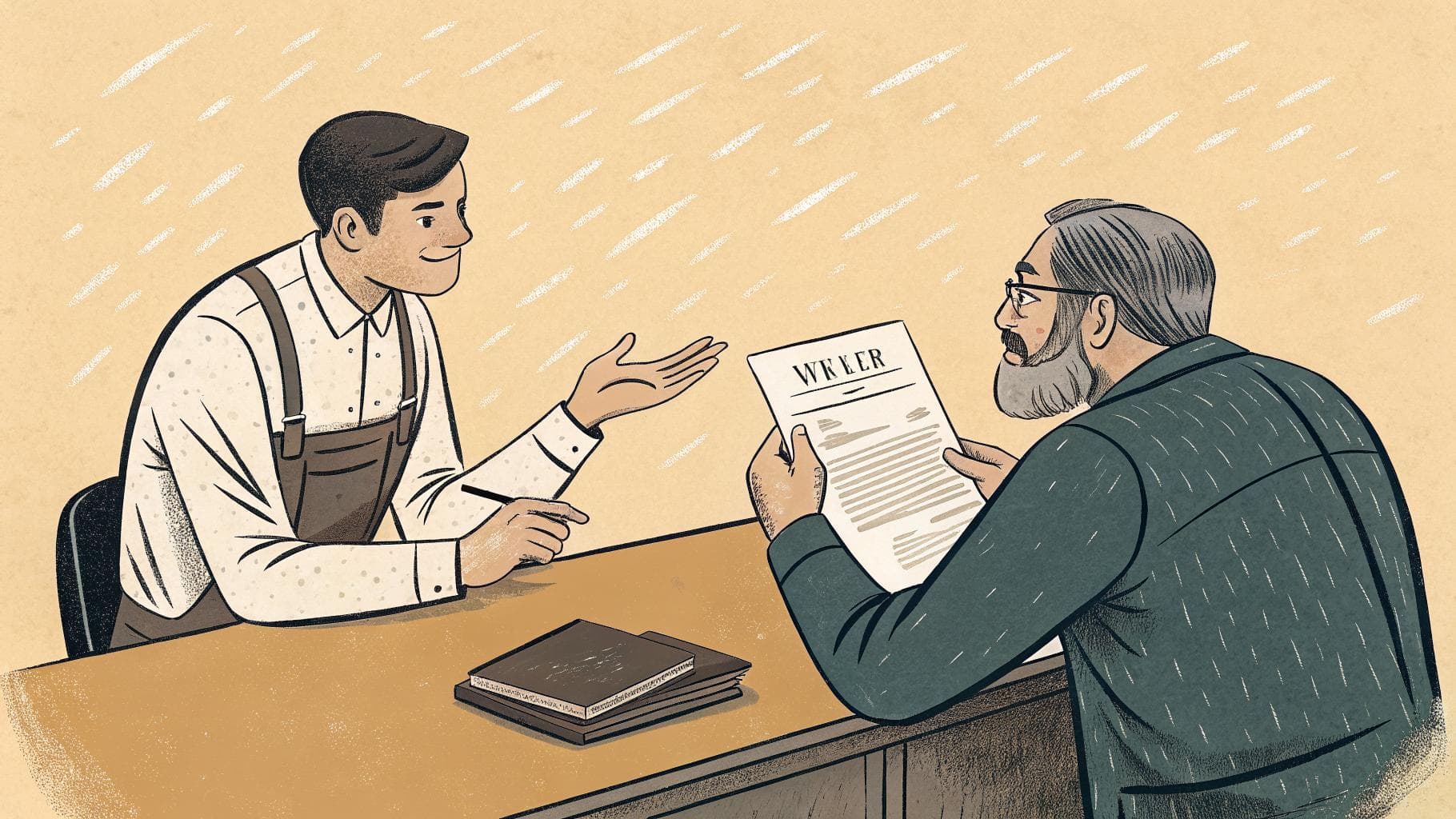
You're About to Write a Check. Here's What to Check First.
You've sat through three demos this month. Each one looked polished. The vendor knew your industry language, had a slide with a company that sounds like yours, and quoted an ROI number that seemed almost too good. Now you're being asked to sign before the "pricing expires."
Something feels off, but you can't name it.
That feeling is worth trusting. Most AI implementations that fail don't fail because the technology stopped working. They fail because the warning signs were there in the sales process and nobody knew what to look for. This article gives you a specific checklist — not abstract principles, but actual behaviors in demos, contracts, and sales calls that predict whether a vendor will still be useful to you six months from now.
Why This Is Urgent Right Now
The AI vendor market changed significantly between 2023 and 2024. What used to be a smaller field of enterprise-focused tools became a crowded market of thousands of products, many of them built on the same underlying models (GPT-4, Claude, Gemini) with thin layers of customization on top.
That's not inherently bad. But it created a specific problem for business owners: it became extremely easy to build something that looks production-ready in a demo and isn't when you connect it to your actual data, your actual workflows, and your actual team.
According to KPMG's 2024 AI in Business survey, a significant share of organizations reported that AI projects failed to meet expectations — with integration complexity and poor vendor support ranking among the top reasons. The vendors who sell you on a thirty-minute demo and disappear after implementation are, right now, collecting checks from people who trusted a good slide deck.
You're buying during a window when the hype is still ahead of the delivery. That means your due diligence has to be sharper than the average enterprise buyer with a dedicated IT department. You don't have that buffer. You need to get this right the first time.
Five Warning Signs That Predict a Failed Implementation
1. The Demo Uses Their Data, Not Yours
The concept: A vendor who won't run their product on your actual data during the sales process is showing you theater, not capability.
This matters because the gap between "works on our demo dataset" and "works on your messy, real-world data" is where most AI implementations die. Your data has inconsistencies, gaps, formatting quirks, and edge cases that no canned demo accounts for. If a vendor isn't willing to ingest a sample of your data before you sign — even a sanitized version — they're either not confident in their product or they're not interested in the extra work.
A mid-sized logistics company in the Southeast signed a six-figure contract with an AI document processing vendor after a polished demo using clean invoice templates. When they connected their actual supplier invoices — which came in seventeen different formats from international vendors — the accuracy rate dropped below what their manual team was already achieving. The vendor had never tested against that variability.
Rule of thumb this week: Before your next demo, email the vendor and ask them to run a fifteen-minute session using a sample file or dataset you provide. If they decline or deflect, that's your answer.
2. The Contract Has No Performance Benchmarks
The concept: If the contract doesn't define what "working" means in measurable terms, you have no recourse when it doesn't work.
Vendors who are confident in their product will write performance standards into agreements — accuracy thresholds, uptime guarantees, response time benchmarks. Vendors who aren't confident will use language like "best efforts," "expected outcomes," and "results may vary." That language protects them, not you.
This is especially common in AI contracts right now because many vendors are still figuring out their own product limitations. Vague language isn't always bad faith — sometimes it's just a company that doesn't yet know what their tool can reliably deliver. Either way, you're the one taking the risk.
A healthcare staffing firm signed an AI scheduling tool contract with no defined fill-rate improvement benchmark. Six months later, the vendor pointed to "system usage" as proof of success while the firm's actual scheduling efficiency was unchanged. The contract gave them nothing to stand on.
Rule of thumb this week: Redline any contract that lacks specific, measurable success criteria. Add a line that defines what success looks like in your terms — and a 90-day exit clause if those benchmarks aren't met.
3. They Can't Name a Customer Like You
The concept: If a vendor can't connect you with a reference customer in a similar industry, at a similar company size, with a similar use case, their case studies are decoration.
Enterprise references don't help you. A Fortune 500 retailer deploying AI with a dedicated data science team has nothing in common with your 40-person operation. What you need is evidence that this tool worked for someone who had your constraints — limited IT support, a small budget for change management, and a team that wasn't hired to babysit software.
Vendors often have one or two lighthouse enterprise clients they use to establish credibility, but their SMB track record is thin. That's not a dealbreaker by itself — someone has to be first. But you should know that's the position you're in, and price accordingly.
Rule of thumb this week: Ask directly: "Can you give me the contact information for two customers under 100 employees who have been live for at least six months?" If they can't, or if the references they offer are all enterprise accounts, negotiate your pricing down to reflect the risk you're actually absorbing.
4. The Onboarding Plan Is Vague After the Signature
The concept: A vendor who can't describe your first 30 days in specific terms hasn't thought through your implementation — they've thought through your sale.
Good vendors have an onboarding playbook. They can tell you exactly who from their team will work with you, how long data integration typically takes, what your team will need to do, and what a successful first month looks like. If the answer to "what happens after we sign?" is a folder of documentation and a Zoom link to a general onboarding call, you're likely headed for a support ticket queue.
A professional services firm bought an AI proposal-writing tool for their sales team. The vendor's post-signature support consisted of a self-serve knowledge base and a community forum. With no dedicated onboarding, only two of their eleven salespeople ever used the tool consistently. They paid for 11 seats for 12 months.
Rule of thumb this week: Ask for the onboarding timeline document before you sign. It should have dates, owners, and milestones. If it doesn't exist yet, ask when you'll receive it. The answer tells you everything.
5. The Pricing Model Punishes You for Success
The concept: Some AI pricing structures are designed so that the more value you get, the more you pay — in ways that aren't obvious during the sales conversation.
Watch for usage-based pricing tied to outputs rather than seats. If you're charged per document processed, per API call, or per "AI action," your costs can scale unpredictably the moment the tool starts working. Vendors rarely surface worst-case scenarios during the sales process. They'll show you average usage from their most conservative customers.
This isn't inherently predatory — usage-based models can be fair. But you need to model your actual volume before you sign, not their assumed volume. A marketing agency that automated client reporting with an AI tool discovered their monthly bill tripled after three months as more clients were onboarded. The per-report pricing looked reasonable at 20 reports. At 80 reports, it was more expensive than their previous manual process.
Rule of thumb this week: Ask the vendor for their top 10% highest-usage customer's monthly bill. Then ask what triggers that usage level. If that ceiling is reachable for your business, build it into your budget before you sign.
How This Connects to Your Specific Situation
Not every red flag is a dealbreaker. Context matters. Here's how to think through what you're seeing.
If you're a first-time AI buyer with no internal tech support: The demo-data test and the onboarding plan are your two non-negotiables. You do not have the capacity to absorb a rocky implementation. If the vendor can't demonstrate on your data and can't show you a specific onboarding roadmap, wait for one that can. There are enough vendors in this market that you don't have to take on extra risk.
If you're replacing a process that already works adequately: The performance benchmarks in the contract matter most. You're not buying a moonshot — you're buying a measurable improvement. Define that improvement in writing before you sign. If a vendor pushes back on specific benchmarks, they're telling you they don't believe in their own numbers.
If you're in a regulated industry (healthcare, financial services, legal): Add a fifth conversation to your sales process: ask the vendor directly who is liable when the AI output is wrong. Get it in writing. Vendors who haven't thought through compliance and liability in regulated industries are not ready to serve regulated industries, regardless of how good the demo looks.
If you have a competitor who's already using AI successfully: Don't let urgency override diligence. The worst reason to sign a bad contract is because someone else signed a good one. Your competitor's timeline is not your deadline.
Traps That Are Easy to Fall Into
Trap 1: Mistaking a good demo for a good product. Demos are produced and practiced. The person running your demo is almost certainly not the person who will support your implementation. Ask to speak with a customer success manager or implementation lead before you sign. If you can't reach them pre-sale, think about how hard they'll be to reach post-sale.
Trap 2: Letting the "expiring discount" rush your decision. Artificial urgency is a pressure tactic, not a business reality. Software pricing deadlines are almost always flexible. If a vendor will only hold pricing for 48 hours, tell them you need two more weeks for proper due diligence. Vendors who walk away from deals over a two-week delay were not interested in a long-term relationship.
Trap 3: Signing an annual contract before running a pilot. Many vendors offer pilots — sometimes free, sometimes reduced cost. A 30 or 60-day paid pilot with real data and real users is worth far more than any reference call. If a vendor won't offer a structured pilot before an annual commitment, treat that as a red flag. You wouldn't hire a full-time employee without a probationary period.
Trap 4: Evaluating the tool in isolation from your team. The person who will use the AI daily is not you — it's someone on your team. Get them in the room during the demo. Their objections and questions will surface issues that you won't think to ask. Tools that your team won't adopt are tools you'll stop paying for in eight months.
Your Next Step This Week
Pick the AI vendor you're currently furthest along with — the one you're closest to signing. Before the next conversation, send them one email asking three things: Can they run a demo on a sample of your data? Can they share their onboarding timeline document? And can they connect you with two customers under 100 employees who've been live at least six months?
Their response — and how quickly they respond — will tell you more about what working with them will be like than any slide deck has.
What's the biggest thing that's stopped you from pulling the trigger on an AI tool so far — was it the tool, the contract, or something about the sales process?